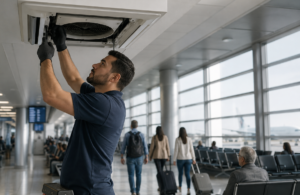
San Jose Airport facilities serve thousands of travelers, employees, airline crews, vendors, and visitors moving through one of Silicon Valley’s most important transportation hubs. From ticketing counters and security checkpoints to baggage claim, lounges, restaurants, administrative offices, maintenance areas, and passenger waiting zones, every part of an airport depends on a comfortable indoor environment. Travelers may not think about heating and cooling systems when they arrive for a flight, but they quickly notice when a terminal feels too hot, too cold, stuffy, or uncomfortable.
That is why dependable HVAC systems are essential for airport operations. San José Mineta International Airport plays a major role in connecting the Bay Area to business, tourism, technology, and major events. The official San José Mineta International Airport website highlights its position as a convenient gateway in the heart of Silicon Valley, and that level of activity requires strong facility management behind the scenes. One of the most important parts of that management is making sure heating, ventilation, and air conditioning systems work when travelers and staff need them most.
For facilities in and around the airport, fast and reliable HVAC Repair San Jose is not just about fixing a broken air conditioner. It is about protecting passenger comfort, supporting employee productivity, maintaining indoor air quality, and keeping public spaces ready for constant use.
Airport Comfort Starts Before the Flight
Travel can be stressful. Passengers are often dealing with parking, luggage, boarding passes, security lines, gate changes, delays, and tight schedules. When the airport environment feels comfortable, it helps reduce some of that stress. When indoor temperatures are unpleasant, the entire travel experience can feel more frustrating.
Airport HVAC systems help create the first impression travelers have when they walk into the terminal. A cool, clean, balanced indoor environment makes the airport feel professional and well managed. A warm, humid, or poorly ventilated terminal can make passengers feel uncomfortable before they even reach their gate.
The history and public importance of the airport are outlined in the Wikipedia overview of San Jose International Airport, which explains its role as a major airport serving San Jose and the surrounding region. Because the airport serves such a large and active area, the comfort of its facilities matters every day.
Airport comfort is not only about the traveler sitting at the gate. It affects people at ticket counters, rental car areas, baggage claim, restaurants, restrooms, hallways, offices, and employee workspaces. Every one of those areas depends on consistent airflow, reliable heating, strong cooling, and proper ventilation.
Airport Facilities Put Heavy Demand on HVAC Systems
An airport is not like a small office building or retail store. It has large open areas, high ceilings, automatic doors, crowded waiting spaces, equipment rooms, food service areas, security zones, and back-of-house operations. These different spaces often need different heating and cooling requirements at the same time.
One area may need extra cooling because of large crowds. Another may need stronger ventilation because of food service activity. A back office may need steady temperature control for employee comfort. A technology or equipment room may need cooling to protect sensitive systems. This makes HVAC performance more complicated in airport facilities than in many other commercial buildings.
San Jose Airport also operates in a region known for business travel, technology events, tourism, and major Bay Area activity. Airport news and updates are regularly posted through the official SJC news releases, showing how often the airport is involved in travel growth, technology improvements, passenger updates, and regional development.
Because airport spaces are used so heavily, HVAC systems can wear down faster when they are not properly maintained. Filters collect dust and debris. Motors work harder. Coils can become dirty. Thermostats and controls may lose accuracy. Ductwork may develop airflow problems. Refrigerant issues may reduce cooling power. Small mechanical problems can quickly turn into larger comfort issues if they are ignored.
Passenger Experience Depends on Reliable Climate Control
Passengers may not know what kind of HVAC system an airport uses, but they know how the building feels. If a gate area is too warm, people notice. If a baggage claim area feels stuffy, people notice. If a restaurant or waiting area feels uncomfortable, people may leave with a negative impression of the airport.
Reliable climate control helps travelers feel calmer and more comfortable while they wait. It also supports better movement through the airport. People standing in security lines or waiting at ticket counters are more likely to become frustrated when the indoor environment is uncomfortable. A stable temperature helps make crowded areas feel more manageable.
This matters even more during peak travel times. San Jose Airport has prepared for large visitor traffic connected to major Bay Area events, including updates such as the airport’s official announcement about welcoming Super Bowl travelers. When passenger volume increases, the HVAC system has to work harder to keep terminals comfortable.
Peak travel periods can put serious pressure on heating and cooling equipment. More people in the building means more body heat, more doors opening and closing, more activity in restaurants, and more demand on ventilation systems. If the HVAC system is already struggling, high-traffic periods can make the problem worse.
Clean Airflow Supports Health, Comfort, and Confidence
Ventilation is one of the most important parts of airport comfort. Good airflow helps prevent indoor spaces from feeling stale, heavy, or uneven. It also helps move air through crowded public areas where people are constantly arriving, waiting, walking, eating, and gathering.
Airport buildings have many indoor air quality challenges. Passengers bring in dust, allergens, and outdoor particles. Doors open frequently near curbside pickup and drop-off areas. Food vendors create heat and odors. Restrooms, maintenance corridors, offices, and public areas all need proper air movement. HVAC systems help manage these challenges by filtering, circulating, heating, and cooling indoor air.
The Federal Aviation Administration provides guidance and oversight for airport development and operations across the country, and airport facility planning often involves complex building systems that support public safety and passenger movement. While travelers usually focus on flights, parking, and luggage, facility managers must focus on the systems that keep the airport usable and comfortable.
When airflow is poor, some spaces may feel hot while others feel cold. Employees may complain that certain rooms never cool down. Passengers may feel uncomfortable near windows, doors, restaurants, or crowded gate areas. HVAC repair helps correct these problems by identifying the cause of weak airflow, uneven temperatures, failing parts, or system imbalance.
Airport Growth Makes HVAC Repair More Important
As airports grow and modernize, HVAC systems must keep up. New construction, renovated terminals, updated passenger amenities, added technology, and expanded services can all change the heating and cooling needs of a facility. Older HVAC equipment may not always perform well under modern airport demands.
San Jose has continued to plan for airport improvements through long-term facility and transportation development. The City of San Jose’s SJC Airport Master Plan Update explains that airport planning includes facility improvements designed to accommodate aviation demand. These types of improvements can involve terminals, access, passenger movement, parking, and other airport infrastructure.
HVAC repair becomes especially important during periods of change. When facilities are upgraded, systems may need to be adjusted, repaired, balanced, or replaced. A renovated area may expose weaknesses in older equipment. A new passenger flow pattern may place heavier demand on certain zones. A growing airport needs mechanical systems that can support both current operations and future expansion.
The airport’s official Airport Improvement Program also highlights the importance of terminal construction, access improvements, parking, airfield upgrades, passenger amenities, and technology. All of these improvements work best when the building systems supporting them are dependable.
Energy Efficiency Matters in Airport Operations
Airports use a large amount of energy because they operate major public facilities for long hours. HVAC equipment is often one of the largest energy users in a commercial building. When the system is not working correctly, energy waste can increase quickly.
A struggling HVAC system may run longer than necessary. Dirty filters can restrict airflow. Worn parts can reduce performance. Faulty thermostats can cause uneven heating or cooling. Leaky ducts can waste conditioned air. These problems may not always cause an immediate breakdown, but they can make the system less efficient and more expensive to operate.
San Jose Airport has also highlighted sustainability and environmental responsibility through its official environmental programs. Energy-conscious airport operations depend on well-maintained systems, and HVAC repair supports that goal by helping equipment work the way it was designed to work.
Efficient HVAC systems help reduce strain on equipment, improve comfort, lower unnecessary energy use, and extend the life of major mechanical components. For airport facilities, that can mean fewer emergency repairs, better long-term performance, and a more comfortable experience for the public.
Airport Employees Depend on Comfortable Workspaces
Travelers are not the only people affected by HVAC performance. Airport employees spend long hours inside the facility. Airline staff, security personnel, maintenance crews, administrative workers, restaurant employees, retail workers, custodial teams, and transportation staff all need comfortable work environments.
When employees are too hot, too cold, or working in poorly ventilated areas, their focus and productivity can suffer. In an airport, where staff often deal with tight schedules, passenger concerns, delays, and busy crowds, comfort plays an important role in how smoothly people can do their jobs.
A gate agent helping delayed passengers needs a comfortable workspace. A restaurant worker serving travelers during a rush needs proper cooling. Maintenance teams need safe indoor conditions while managing facility issues. Office employees need steady temperatures to stay productive. HVAC repair helps create better working conditions for everyone who keeps the airport operating.
Comfortable employees can serve passengers better. That connection is important because airport reputation is often shaped by the quality of service travelers receive. Behind every good passenger experience, there are employees who need the building systems around them to work properly.
Technology and Equipment Need Temperature Protection
Modern airports depend on technology. Flight information displays, baggage systems, ticketing kiosks, payment systems, security equipment, communication systems, office networks, and building controls all support daily operations. Many of these systems need stable indoor temperatures to function properly.
San Jose Airport has continued to show its connection to innovation through updates such as its official announcement about Waymo service at SJC. As airport technology continues to grow, temperature control becomes even more important.
Equipment rooms, server areas, electrical spaces, and control rooms can be sensitive to heat and humidity. Poor HVAC performance may not only make people uncomfortable, but it can also place equipment at risk. Overheated systems may wear down faster or become more vulnerable to performance problems.
Reliable HVAC repair helps protect these hidden but important areas. Travelers may never see the equipment room that supports airport operations, but they will notice if technology fails. Proper heating, cooling, and ventilation help reduce the risk of preventable problems.
Conclusion
San Jose Airport facilities depend on reliable HVAC repair because comfort is part of the travel experience. A well-maintained airport does more than move passengers from one place to another. It creates an environment where travelers feel comfortable, employees can work effectively, technology can operate safely, and public spaces remain ready for heavy daily use.
From terminals and ticket counters to baggage claim, restaurants, offices, maintenance areas, and equipment rooms, every part of an airport depends on strong climate control. When HVAC systems are working properly, passengers may not think about them at all. That is exactly the point. The best HVAC systems support the airport quietly in the background, keeping the facility comfortable, efficient, and reliable.
As San Jose Airport continues serving Silicon Valley, major events, business travelers, families, tourists, and airport employees, dependable heating, ventilation, and air conditioning will remain essential. Fast HVAC repair helps protect the passenger experience, reduce disruptions, support energy efficiency, and keep airport facilities prepared for whatever the travel day brings.