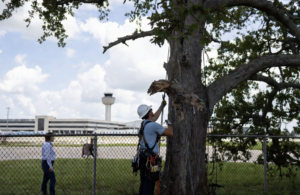
Airport properties are different from ordinary commercial properties. The land surrounding runways, access roads, hangars, cargo facilities, parking areas, drainage zones, and terminal-adjacent spaces has to be managed with a higher level of awareness because safety, visibility, liability, property access, and long-term operational reliability are all connected. In Memphis, where airport activity supports travel, logistics, cargo movement, business development, and regional transportation, trees can be both an asset and a risk depending on how they are maintained.
A healthy tree canopy can improve curb appeal, reduce heat around paved areas, support stormwater management, and create a more professional appearance for airport-related properties. However, neglected trees can become hazards quickly. Dead limbs, weak root systems, storm-damaged trunks, overgrown branches, poor visibility near roads, and vegetation that attracts wildlife can create problems before property owners realize the risk is growing.
That is why airport property managers, commercial landowners, aviation-adjacent businesses, and facility teams should involve a qualified arborist before trees become a safety problem. Tree care around airport properties is not just landscaping. It is risk management, access management, and property protection.
Why Trees Matter More Around Memphis Airport Properties
Memphis International Airport plays a major role in the region’s transportation and logistics identity. The airport is widely recognized as a major passenger and cargo hub, and its surrounding properties often support hotels, warehouses, trucking companies, rental facilities, office parks, fuel services, airport vendors, industrial properties, and other businesses tied to movement and access. According to the official Memphis International Airport news page, airport updates often involve new routes, operational announcements, and ongoing activity that reflect how important the airport is to the Memphis area.
Because airport properties are built around access and movement, even a single unsafe tree can create a serious disruption. A fallen limb can block a service road. A leaning tree can threaten parked vehicles or airport-adjacent structures. Overgrowth can reduce visibility for drivers entering or exiting a property. Branches hanging over signage, lighting, fences, utility lines, or drainage areas can create maintenance concerns that become more expensive over time.
An arborist helps identify those concerns early. Instead of waiting until a storm exposes a weak tree, property owners can take a proactive approach. This includes evaluating tree health, pruning hazardous limbs, identifying disease or decay, checking soil and root conditions, and recommending removal only when it is necessary for safety.
Airport Safety Starts Before a Tree Falls
The biggest mistake many commercial property owners make is treating tree care as a cosmetic issue. Around airport properties, tree care has a direct connection to safety. Trees that look fine from a distance may have internal decay, structural weakness, root damage, fungal growth, old storm injuries, or hidden cracks that are easy to miss without professional evaluation.
When a tree fails near an airport property, the impact can be more serious than a routine cleanup. It can affect traffic flow, damage fencing, interfere with access gates, create liability exposure, block emergency routes, or damage vehicles and buildings. For businesses operating near Memphis International Airport, delays and access problems can affect customers, employees, vendors, and service providers.
A qualified arborist looks at trees from a risk perspective. The question is not simply whether a tree is alive. The question is whether it is structurally sound, properly located, safely maintained, and appropriate for the property’s use. That matters around airport hotels, cargo facilities, warehouse lots, rental car properties, private aviation support businesses, and commercial sites where vehicles and people are constantly moving.
For airport-adjacent properties that need local help, working with an Arborist Near Me Memphis can help property owners make informed decisions before overgrowth, damage, or decay becomes a larger safety concern.
Tree Overgrowth Can Affect Visibility, Access, and Security
Visibility is a major concern around airport properties. Drivers need to see signs, entrances, exits, security gates, pedestrians, parked vehicles, loading areas, and traffic patterns clearly. When trees are allowed to grow without proper pruning, branches can block lights, signs, camera views, building numbers, and access points.
This can create confusion and risk, especially at night or during storms. Memphis weather can bring heavy rain, wind, humidity, and seasonal storms that turn weak branches into hazards. Trees that are too close to driveways, fence lines, parking lots, or service entrances can also make routine property operations more difficult.
Security is another reason airport properties need responsible tree management. Overgrown trees and shrubs can create hiding places, reduce camera visibility, block lighting, and make fence inspections harder. Around properties connected to aviation, logistics, and transportation, maintaining clear lines of sight is not just about appearance. It supports safer property management.
An arborist can recommend selective pruning that improves visibility without stripping the property of its natural appeal. The goal is not to remove every tree. The goal is to keep the right trees in the right condition, in the right places, with a maintenance plan that supports the property’s purpose.
Wildlife Concerns Make Tree Management Even More Important
One issue that is especially important near airports is wildlife attraction. Trees, landscaping, standing water, fruiting plants, dense vegetation, and unmanaged green areas can attract birds and other wildlife. Near airport environments, wildlife can become a serious operational concern.
The Federal Aviation Administration’s wildlife management guidance explains that improper landscaping can attract animals to airport areas, while proper landscaping can help deter wildlife. This is one of the clearest reasons airport properties should not treat tree care as ordinary lawn maintenance.
An arborist can help property owners understand which trees may attract birds or other wildlife, which limbs or canopy conditions create nesting opportunities, and which areas need to be managed more carefully. This is especially important for properties close to open land, drainage areas, retention ponds, service roads, or airport perimeter zones.
The FAA also provides guidance on wildlife hazards near airports, including land uses and conditions that may attract hazardous wildlife. While every property is different, the general principle is clear: vegetation choices and maintenance practices matter near aviation environments.
Memphis Airport Growth Increases the Need for Proactive Property Care
Airport property is rarely static. Routes change, traffic patterns shift, cargo operations evolve, nearby development expands, and surrounding businesses adapt to airport activity. The Tennessee aviation system is broad and economically significant. The Tennessee Aviation System Plan notes that Tennessee’s public-use airport system supports commercial aviation, flight training, education, air cargo, and other aviation-related activity across the state.
For Memphis property owners, this broader aviation context matters. Airport-adjacent properties are often part of a larger commercial ecosystem. A hotel near the airport depends on easy guest access. A warehouse depends on truck movement. A logistics property depends on clear routes and reliable grounds. A service facility depends on safe parking, lighting, and entry points. Trees that are not maintained can quietly work against all of those goals.
The Tennessee Department of Transportation Aeronautics Division provides support for airport planning, development, promotion, construction, and related aviation needs across Tennessee. That reinforces a bigger point for private property owners near airports: the surrounding environment matters. Safe, functional, well-maintained properties support the transportation network around them.
An Arborist Helps Prevent Expensive Emergency Tree Removal
Emergency tree removal is almost always more stressful and more expensive than proactive care. When a tree falls unexpectedly, property owners may have to deal with blocked access, damaged structures, insurance claims, tenant complaints, vehicle damage, utility concerns, and urgent cleanup needs. Around airport properties, the timing can be even worse because many businesses operate early, late, overnight, or on tight logistics schedules.
An arborist can reduce the chance of surprise failures by inspecting trees before storms, identifying high-risk limbs, evaluating deadwood, and recommending scheduled maintenance. This type of proactive tree care helps property owners budget more effectively and avoid reacting to problems after damage is done.
In many cases, a tree does not need to be removed. Proper pruning, cabling, soil care, or ongoing monitoring may be enough. In other cases, removal is the responsible choice because the tree is too damaged, diseased, poorly located, or structurally unsafe. The value of hiring an arborist is that property owners get professional guidance instead of guessing.
Tree Health Affects Drainage, Pavement, and Property Longevity
Airport properties often include large paved areas, parking lots, loading zones, sidewalks, access drives, and drainage systems. Trees interact with all of those features. Roots can lift pavement, interfere with curbs, damage walkways, and affect underground utilities. Poorly placed trees can contribute to drainage problems or become unstable in oversaturated soil.
Memphis properties also have to deal with heat, humidity, heavy rain, and seasonal weather changes. Trees that are planted too close to pavement or buildings may struggle over time, leading to weak growth and structural stress. An arborist can evaluate whether trees have enough soil volume, whether roots are causing damage, and whether certain trees should be replaced with better-suited species.
This matters for long-term property planning. A tree that seems manageable today can become a recurring maintenance issue if it is planted in the wrong place. Proper arborist guidance helps airport property owners protect both the landscape and the built environment.
Authority, Trust, and Better Property Decisions
For commercial property owners, trust matters. Tenants, vendors, employees, travelers, and customers all judge a property by how safe and well maintained it appears. A property with dead trees, broken limbs, blocked signage, poor lighting visibility, and overgrown access points can create the impression that other parts of the operation may also be neglected.
Professional tree care supports a stronger property reputation. It shows that the owner or manager is paying attention to safety, appearance, access, and long-term maintenance. That is especially valuable around Memphis airport properties, where first impressions often happen quickly as people arrive, park, unload, check in, pick up vehicles, or move through commercial sites.
Even the broader profile of Memphis International Airport helps explain why nearby properties should be held to a higher standard. Wikipedia’s overview of Memphis International Airport describes it as a civil-military airport serving Memphis and located southeast of downtown in Shelby County. Around a property connected to such an important transportation area, safety planning should include the trees that surround buildings, roads, parking lots, and access points.
What an Arborist Looks for on Airport-Adjacent Properties
A professional arborist can inspect a property for issues that a general maintenance crew may not recognize. This may include dead or cracked limbs, hollow trunks, fungal growth, included bark, weak branch unions, root damage, soil compaction, pest activity, storm stress, poor pruning cuts, clearance problems, and trees planted too close to buildings or pavement.
The arborist may also look at how the tree interacts with the property. Does it block lighting. Does it reduce visibility. Does it hang over a walkway. Does it interfere with signage. Does it drop excessive debris in a parking area. Does it attract wildlife. Does it create a concern near fences, gates, cameras, or drainage systems.
This kind of evaluation helps airport property managers prioritize work. Not every tree issue is urgent. Some concerns can be scheduled as routine maintenance. Others may need immediate attention. A professional assessment helps property owners spend wisely and act before small risks turn into expensive problems.
Conclusion: Safer Airport Properties Start with Proactive Tree Care
Memphis airport properties operate in an environment where access, visibility, safety, security, and reliability matter every day. Trees can make those properties more attractive, more comfortable, and more valuable, but only when they are properly maintained. When trees are ignored, they can become safety hazards that threaten vehicles, buildings, people, operations, and property reputation.
Hiring an arborist before problems become emergencies is one of the smartest decisions an airport-adjacent property owner can make. It gives property managers a clearer understanding of tree health, structural risk, wildlife concerns, visibility issues, and long-term maintenance needs. It also helps prevent costly surprises that can disrupt business and create liability.
For Memphis airport properties, proactive tree care is not just about landscaping. It is about protecting movement, safety, and trust. A well-maintained property sends the right message before anyone walks through the door, parks a vehicle, enters a gate, or arrives for business. With professional arborist guidance, trees can remain an asset instead of becoming the next safety problem.