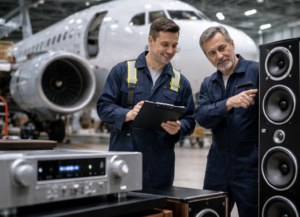
Airlines operate in a world where details matter. Safety, timing, comfort, communication, and customer perception all shape how travelers experience a brand from the moment they arrive at the airport to the moment they leave the aircraft. That is one reason this topic makes more sense than it may seem at first glance. When an airline team looks for a Hifi Store Near Me, the search is not just about buying speakers for entertainment. It can be about improving lounge environments, executive offices, briefing rooms, training spaces, event setups, premium waiting areas, and even brand presentation in customer-facing spaces. In an industry where recent coverage has focused on safety reform, operating pressure, and the passenger experience, the quality of sound inside airline environments can support the kind of polished and dependable image carriers want to project.
Why Audio Quality Still Matters in Airline Environments
Airlines are not only transportation companies. They are hospitality brands, logistics operators, technology users, and public-facing service businesses all at once. Every major carrier works hard to create consistency across touchpoints, and sound is one of those touchpoints that people notice immediately. Whether it is background music in a premium lounge, crystal-clear audio in a private meeting room, or a demonstration system in a corporate space, weak sound can make an otherwise polished setting feel dated. Strong sound, on the other hand, can make a space feel calm, refined, and intentionally designed.
This matters even more now because the airline business is being watched closely from multiple angles. Reuters coverage on aviation safety reform shows how closely the public follows aviation standards, while IATA’s January 2026 passenger demand update points to continued passenger activity around the world. When traffic remains active and public scrutiny stays high, airlines have even more reason to make every physical environment feel credible, modern, and well managed.
Airline Lounges Depend on Atmosphere, and Atmosphere Depends on Sound
One of the clearest reasons an airline may look for a local high-fidelity retailer is the premium lounge. Lounges are built to reduce stress and create an upscale experience for travelers who expect more than a gate-area seat and a charging outlet. The lighting, seating, design, food, and sound all work together. If the sound system is harsh, muddy, too weak, or poorly distributed, the room feels less premium no matter how much money was spent on finishes.
Recent airline news continues to show how much pressure carriers face from pricing, fuel, and customer expectations. AP reporting on rising airfare pressure tied to jet-fuel costs and Reuters reporting on Delta’s fuel-driven growth pullback both reflect a climate where airlines have to justify premium experiences more carefully. When every customer touchpoint matters, a lounge that feels elevated can help support loyalty, premium ticket perception, and overall brand value.
Executive Offices and Airline Headquarters Need Better Listening Environments
Airline decisions are made in boardrooms, strategy rooms, operations centers, and executive offices. Those spaces are often used for vendor presentations, route planning, leadership discussions, training sessions, remote meetings, and investor-facing conversations. In those settings, poor audio is more than an annoyance. It creates fatigue, miscommunication, and a lower-quality environment for serious work.
A nearby high-fidelity store can help airline leaders find systems that match the room, the purpose, and the level of professionalism they want to convey. That might mean two-channel listening setups for executive offices, discreet premium speakers for conference rooms, or integrated sound solutions for presentations and internal events. Airlines make decisions in high-stakes environments, and clean sound supports clarity. That principle fits with the broader aviation focus on communication, reliability, and operational discipline that organizations such as the FAA and ICAO continue to emphasize in current aviation updates.
Training Rooms, Simulations, and Briefing Spaces Benefit From Accurate Sound
Airlines also use specialized spaces for training and briefing. These are not always public-facing rooms, but they are still critical. Pilots, flight attendants, customer service teams, and operations staff work in environments where communication quality matters. Clear playback, accurate speech reproduction, and dependable equipment support more focused training sessions and better comprehension.
This does not mean every airline is building an audiophile showroom in a training center. It means there is real value in choosing equipment from a knowledgeable local retailer instead of settling for generic, one-size-fits-all consumer gear. A strong local shop can advise on room size, signal chain, speaker placement, amplification, and acoustic balance. For an airline brand that values precision, those details matter.
That connection between service quality and measurable performance also appears in public-facing oversight. The U.S. Department of Transportation’s Air Travel Consumer Reports reinforce how closely airline service outcomes are tracked. When an industry is judged on consistency, presentation, and reliability, it makes sense that airline teams would care about the quality of internal environments too.
Brand Experience Extends Beyond the Aircraft Cabin
A common mistake is thinking that airline branding only lives on the plane or on the website. In reality, the brand continues in customer lounges, sponsor events, media rooms, airport suites, partnership spaces, and special hospitality areas. Sound helps shape those moments. A well-designed system can make a press event feel polished, a VIP waiting space feel relaxing, and a partner activation feel more premium.
That is especially true in an industry with a long and highly visible history. Even a broad look at Wikipedia’s overview of airlines shows how complex the business has become over time, with carriers operating as major global service brands rather than simple transport providers. Modern airlines compete on image, loyalty, trust, and perceived quality as much as route maps alone. A refined audio environment supports that wider identity.
Local Expertise Matters More Than Buying Random Equipment Online
Another reason airlines may search locally is practical. A nearby specialist offers something online marketplaces cannot match easily: listening experience, installation guidance, product matching, and service after the sale. An airline office manager, facilities director, lounge designer, or executive assistant may not want to gamble on unfamiliar equipment based only on product descriptions. They may want to hear the system, compare options, and work with someone who understands performance in real spaces.
That kind of local relationship is valuable in any business, but especially in aviation, where timing and dependability matter. Airlines operate on schedules, standards, and accountability. A strong local retailer can often help faster with setup advice, upgrades, troubleshooting, and future expansion. For companies that value operational continuity, that is a real advantage.
Premium Audio Aligns With Premium Perception
Airlines invest heavily in the premium end of their business because premium perception drives revenue, loyalty, and brand strength. The same thinking that leads a carrier to upgrade lounge seating, improve cabin finishes, or refine customer communications can also lead it to improve sound in airline-controlled spaces. Premium sound does not have to be flashy. In most cases, the goal is subtle excellence. Voices sound natural. Music feels balanced. The room becomes more comfortable. The brand feels more thoughtful.
This is particularly relevant in a climate where public conversation around airlines includes mergers, pricing strategy, route decisions, and customer trade-offs. Reuters reporting on airline merger openness from the U.S. transportation secretary and broader industry commentary from IATA’s 2026 risk outlook both reflect how competitive and margin-sensitive the sector remains. In that kind of environment, every part of the experience that supports perceived quality can matter.
Airlines Often Need More Than Entertainment
The phrase high fidelity can make some people think only of music lovers and home stereo enthusiasts. In reality, the need can be broader. Airlines may want quality audio for executive suites, customer reception spaces, hospitality events, screening rooms, donor or sponsor gatherings, museum partnerships, internal presentations, and branded environments at airports or corporate offices. They may also want equipment that reflects stability and taste when hosting partners, investors, or media guests.
That is why a local search for a trusted audio retailer can be a smart business move. It is not always about volume. It is about confidence, clarity, and presentation. Those are values airlines already understand deeply.
Conclusion
Why would an airline search for a local high-fidelity retailer? Because airlines are built on experience, communication, and trust. They serve the public in environments where perception matters, and they operate internal spaces where clear sound and thoughtful design can support better work and stronger branding. Lounges need atmosphere. Offices need clarity. Training rooms need dependable playback. Event spaces need polish. Leadership teams need solutions that feel reliable and well chosen.
In a business shaped by public scrutiny, operational pressure, and constant competition, the quality of a company’s physical environment still carries weight. A great local audio retailer can help an airline create spaces that sound as polished as the brand wants to look. That makes the search practical, strategic, and entirely understandable.